Volkswagen's Major Job Cut Plans
Volkswagen Group, the renowned German automotive manufacturer, is reportedly contemplating a significant reduction in its workforce, potentially cutting up to 100,000 jobs globally. This figure is double the number initially announced. The group's portfolio includes prominent brands such as Porsche, Audi, Seat, and Skoda, along with Volkswagen itself.
Declining Profits and Rising Competition
The decision to consider such extensive job cuts stems from a sharp decline in profits, driven by reduced sales in critical markets and fierce competition from Chinese brands making inroads into Europe. The chief executive, Oliver Blume, highlighted in a memo to the staff that the company's operational costs are approximately 20% higher than those of its competitors, necessitating significant cost reductions.
"We are currently assessing across all brands, companies, and regions how many adjustments are actually necessary and feasible," Blume stated. "We need to become more efficient, more robust, and simpler. We must reduce our costs."
Challenges with Factory Utilization
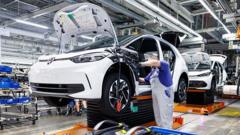
Additionally, Blume acknowledged the uncertainty surrounding the future of four German factories previously threatened with closure. These include facilities in Zwickau and Emden, which focus on electric vehicle production, as well as those in Hanover and Neckarsulm, all considered costly to operate.
Financial Performance and Market Dynamics
Volkswagen's financial performance has been under pressure, with profits declining from €22.6 billion in 2023 to €19.1 billion in 2024, and further down to €8.9 billion last year. The company has been particularly affected by a 26% drop in sales in China, historically a key market, during the first half of the year compared to the previous year. Additionally, a 7% decline in U.S. sales has been partly attributed to tariffs on car imports implemented by the Trump administration.
The incursion of Chinese brands into international markets has intensified competitive pressure, as these brands introduce innovative technologies while benefiting from lower production costs, forcing established companies to reevaluate their cost structures and profit margins.
Labor Relations and Industry Response
In late 2024, Volkswagen reached a deal with the German trade union IG Metall to eliminate 35,000 jobs at its main brand by 2030 in a "socially responsible manner," with an additional 15,000 job cuts planned across its other brands. However, the current discussions suggest even more extensive reductions.
Recently, Volkswagen sites across Germany have witnessed widespread protests in response to these potential cuts, coinciding with a meeting of the company's supervisory board, which includes both labor representatives and company executives. Some industry experts, speaking to Agence France Presse, speculated that the announcement of the 100,000 figure might be a strategic move in negotiations, with the final number of cuts potentially being less severe.
Source: Original Article