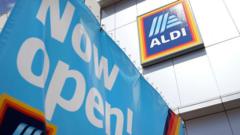
Aldi's Ambitious Expansion in the US
When Mary Porter visited the new Aldi store in Manhattan, she discovered a $4 jar of almond butter, a significant saving compared to the $22 price in her neighborhood. This encounter underlines Aldi's strategy to capture the US grocery market with affordable pricing.
The German supermarket chain, known for its cost-effective offerings, is investing $9 billion to open 800 new stores across the US over the next five years. This expansion marks a significant push into densely populated urban areas like Manhattan, diverging from its traditional suburban strip mall locations.
Challenging Established Competitors
Aldi's growth in the US mirrors its success in the UK, where it and fellow German retailer Lidl disrupted the grocery market in the 1990s. By offering high-quality products at lower prices, they challenged established competitors like Tesco and Sainsbury's.
In the US, Aldi currently holds a 2.9% market share, far behind Walmart's 20%. However, Aldi's strategy of maintaining a smaller footprint may work in its favor. Data from Placer.ai indicates that Aldi is attracting middle- and higher-income shoppers, particularly those with household incomes between $75,000 and $125,000, who are increasingly seeking budget-friendly shopping options.
Adapting to Urban Challenges
The new Aldi location in Manhattan is part of this expansion strategy. Kelvin Dozier, a regular Aldi shopper, appreciates the convenience of the new city location compared to the older Brooklyn store. However, Aldi faces challenges in urban areas, including high real estate costs and logistical hurdles due to congested city streets.
To manage these challenges, Aldi's US chief commercial officer, Scott Patton, explained that they transport goods to the Manhattan store from Connecticut using specialized trucks at night to avoid traffic congestion. This operation involves a two-driver team to navigate the city's narrow streets effectively.
Competitive Landscape
While Aldi aims to increase its market share, experts believe it will not surpass Walmart due to the latter's vast resources. Jerry Sheldon, a retail analyst, highlights the financial disparity between the two companies. Walmart invests over $20 billion annually in technology and supply chain improvements, whereas Aldi focuses on maintaining low costs through its efficient business model.
Despite these challenges, Aldi's ability to offer affordable groceries resonates with consumers like Mary Porter, who appreciates the savings on her grocery bill. As Aldi continues to expand, it remains to be seen how it will influence the US grocery landscape.
Source: Original Article