Ukrainian Forces Target Russian Maritime Supply Routes
Ukraine has intensified its military operations near the Crimea region, which is under Russian control. These actions follow previous attacks on terrestrial supply lines, with a new focus on maritime routes. Ukrainian drone commander Robert Brovdi, known by his alias Magyar, reported that over 25 ships have been struck and set ablaze in the Sea of Azov over the past four days, marking a significant hit to Russia's naval strength and its ability to maintain fuel supplies.
This escalation is part of Ukraine's broader strategy, termed a "logistics lockdown," which aims to sever supply lines into Crimea. Ukrainian officials claim that 36 ships, primarily Russian commercial oil tankers, have been targeted, although the exact count remains uncertain due to potential multiple strikes on the same vessels and lack of independent verification.
Impact on Russian Maritime Operations
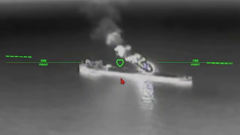
The Sea of Azov, adjacent to Crimea, frequently sees tankers as there is an oil loading facility at Kerch port. The Ukrainian military's recent strikes, some of which have been captured in drone footage and shared on social media, have reduced the number of tankers in the area, corroborated by satellite imagery.
On Wednesday, Russia's Rostov regional governor, Yuri Slyusar, reported that two empty tankers were attacked in Taganrog Bay, and these vessels continued to burn into Thursday. Earlier in the week, two other tankers reportedly carrying 7,000 tons of fuel each were also attacked.
Wider Implications of the Strikes
Ukraine's drone forces have identified several vessels among those hit, including the Venera-3, Sanar-1, and Thetis. The strikes have not been confined to fully laden tankers; a passenger ferry and a bulk carrier at Kerch port were also targeted.
Even ships leaving the Sea of Azov are not safe from Ukrainian strikes. Footage released by Ukraine's general staff shows a naval drone evading fire to attack a sanctioned tanker near Yalta in the Black Sea. Concurrently, Ukraine continues to target Russian oil refineries, exacerbating fuel shortages across Russia, including in major cities like Moscow and St Petersburg.
Ukrainian President Volodymyr Zelensky has justified these actions as responses to Russian aggression, highlighting recent attacks on oil depots in the Tver and Stavropol regions and a terminal in the Rostov area.
International Reactions and Consequences
During a meeting at the NATO summit in Ankara, US President Donald Trump described Ukraine's drone operations as an escalation, though he acknowledged it could potentially lead to conflict resolution. However, the scale of these maritime strikes appears to have intensified, with Ukraine claiming 12 tankers were attacked in one night.
Some Russian sources have expressed concerns about the vulnerability of their tankers, with claims that the Black Sea Fleet has become incapable of providing adequate defense. These developments are particularly troubling for Russia, given its declining refining capacity and widespread fuel shortages.
In Crimea, the Russian-installed administration is struggling with disruptions in power and transportation. Ukraine's military efforts have already compromised land routes into the peninsula, and now focus on maritime routes as well. President Vladimir Putin had previously assured that Crimea's fuel demands, estimated at 70,000 tons per month, would be met, but recent attacks may jeopardize these commitments.
Source: Original Article