Thousands Mourn Iran's Late Supreme Leader in Mashhad
In the holy city of Mashhad, large crowds gathered to witness the burial of Iran's former supreme leader, Ayatollah Ali Khamenei. The ceremony took place at the Imam Reza shrine, a site of immense significance to Shia Muslims in Iran. This event marked the conclusion of six days of mourning ceremonies held in various cities across Iran and Iraq.
The state news agency IRNA reported the burial, which occurred amid heightened tensions between Iran and the United States following an exchange of strikes. These developments threaten to undo a tentative agreement aimed at ending the ongoing conflict in which Khamenei lost his life.
Tensions with the United States
The Revolutionary Guards of Iran accused the United States of targeting two bridges on the railway line from Tehran to Mashhad, allegedly an attempt to overshadow the funeral. Khamenei, along with several family members, was killed in an Israeli airstrike on his residence in Tehran on February 28, the day the conflict with the US and Israel began.
Mojtaba Khamenei, who succeeded his father as the new supreme leader, has not been seen since reports of his severe injuries in the same attack. He did not attend the funeral events in Tehran and Qom, and there is no confirmation of his presence at the burial.
A Nation in Mourning
The coffins of Khamenei, his granddaughter, son-in-law, daughter, and Mojtaba's wife were flown to Mashhad from Iraq. Massive processions had earlier taken place at Shia shrines in Najaf and Karbala, with significant participation from mourners.
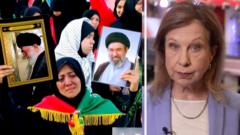
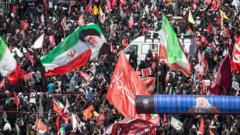
Iranian television broadcast scenes of thousands of individuals in black attire walking along a central boulevard in Mashhad. Many held Iranian flags and red banners that symbolized vengeance, while others displayed photos of the late leader and placards denouncing US President Donald Trump. Banners bearing official slogans, such as "We must rise," were prominently displayed.
"The loss of the leader is heavier than losing our parents," said Hoda, a 35-year-old housewife, to the AFP news agency. "Only the deaths of Trump and Netanyahu will soothe our pain."
The procession saw Khamenei's coffin transported by a lorry through the crowd to the Imam Reza shrine, reaching the site as night approached.
Khamenei's Legacy
Born in Mashhad, Khamenei studied at local seminaries before moving to Qom, the center of Iran's Shia clerical establishment. He became supreme leader in 1989 following the death of Ayatollah Ruhollah Khomeini, the Islamic Republic's founding father. Throughout his 37-year tenure, he maintained strict control over Iran's political and military arenas, often taking hard-line stances against the US and Israel.
Continuing Hostilities
The orchestrated funeral ceremonies were intended to showcase Iran's unity and resilience following a devastating war and the mass protests in January, which saw a harsh crackdown by security forces. However, the mourning has been overshadowed by renewed confrontations with the United States.
President Trump warned of potentially "much worse" US attacks after a second night of strikes targeting Iran's capacity to threaten commercial shipping in the Strait of Hormuz. In response, the Revolutionary Guards launched attacks on US military sites in Kuwait, Bahrain, and Qatar.
Three weeks prior, the US and Iran had signed a memorandum of understanding aimed at ending hostilities and reopening the strategic Strait of Hormuz. This agreement also outlined a two-month timeframe to negotiate a comprehensive deal involving Iran's nuclear program and US sanctions.
Despite reports of progress in indirect talks mediated by Qatar, President Trump recently expressed doubt over the memorandum's viability.
Source: Original Article