Hungarian Parliament Votes to Remove President
In a historic parliamentary session, Hungary's legislative body has voted to remove President Tamás Sulyok from office. This decision comes in the wake of significant political changes following the defeat of former Prime Minister Viktor Orbán's party earlier this year.
Constitutional Amendments and Political Ramifications
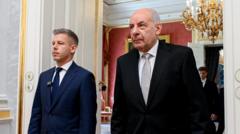
The ruling Tisza party, led by Prime Minister Péter Magyar, utilized its substantial majority to pass the 17th amendment to the Hungarian constitution. This amendment effectively ends the terms of both President Sulyok and the head of the Constitutional Court, Péter Polt. This move marks one of the most significant political shifts since the new government assumed power.
President Sulyok now faces a critical decision. He has five days to either sign the amendment, effectively acknowledging his dismissal, or refer it to the Constitutional Court. Prime Minister Magyar has indicated that should Sulyok choose the latter, impeachment proceedings would be initiated, leading to his automatic suspension from office. Alternatively, resignation is being presented as a viable option to circumvent a constitutional crisis.
Opposition's Reaction and Historical Context
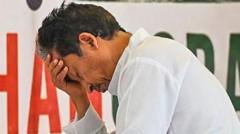
In response to the vote, members of the opposition Fidesz party exited the parliamentary session, accusing the Tisza party of authoritarian tactics. They argue that the amendment allows the government to arbitrarily remove public officials without due process.
"The great irony of the situation is that Fidesz have fallen foul of their own concept of power," stated Péter Rona, a former opposition presidential candidate. The 2011 constitution, crafted under Orbán's government, had established a 'winner takes all' approach, which Fidesz had utilized to consolidate power by placing loyalists in key positions.
The Tisza party's 141 deputies celebrated the vote's outcome with a standing ovation. The amendment also enforces age restrictions on Constitutional Court judges and limits parliamentary deputies to three terms, impacting over half of the current Fidesz representatives.
Expert Opinions and Future Implications
András Baka, a former head of the Supreme Court, expressed support for the president's removal, citing concerns over Fidesz's transformation of Hungary into an authoritarian state post-2010. He noted the complexity of dismantling such a regime, which was designed to endure even after electoral losses.
The amendment is part of a broader legislative package intended to guide Hungary until a new constitution is established in the coming years. However, Baka criticized the term limits for deputies, arguing it restricts voters' rights to elect their preferred candidates.
The Aftermath of Orbán's Defeat
Since the Tisza party's victory in April, Fidesz has struggled to recover. Viktor Orbán has remained largely absent from the public eye and recently left the country to attend the football World Cup finals in the United States. Internal dissatisfaction with Orbán's leadership is growing, highlighted by the resignation of Gergely Gulyás, Fidesz's parliamentary group leader.
Source: Original Article