Trump Proposes Patriot Missile Production in Ukraine
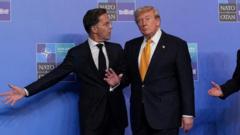
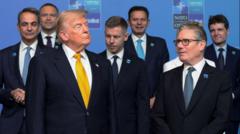
During a NATO summit held in Ankara, US President Donald Trump announced his intention to grant Ukraine a license to manufacture Patriot interceptor missiles. The proposal aims to bolster Ukraine's defenses against increasing ballistic missile attacks from Russia.
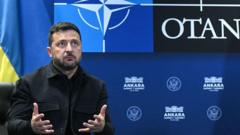
In a conversation with Ukrainian President Volodymyr Zelensky, Trump stated, "We are gonna give you a license to make Patriots," expressing confidence in Ukraine's ability to quickly start production once provided with the necessary guidance. However, he mentioned that defense manufacturers Lockheed Martin and Raytheon had not been informed of this decision yet, adding, "but that'll work out alright."
Patriot Missiles: A Strategic Asset
Patriot missiles are renowned for their ability to detect and intercept incoming missiles, making them one of the world's most advanced air defense systems. However, their production is both costly and time-consuming. A single Patriot battery, including missiles, costs approximately $1 billion (£740 million), and the US Department of Defence reports that only 600 units are produced annually. Given their strategic importance, the US is cautious about depleting its own stockpile, which has been significantly used in recent conflicts, such as the war with Iran earlier this year.
Despite America's reservations, Ukraine's immediate need for these systems is evident. Russia has intensified its ballistic missile strikes on Ukrainian territory, resulting in numerous fatalities, particularly in Kyiv. Zelensky confirmed in May that Ukraine had formally requested authorization for licensed production of Patriots.
Challenges in Domestic Production
While the license could potentially enable Ukraine to enhance its air defense capabilities, skepticism persists regarding the feasibility of producing such sophisticated technology domestically. Ivan Stupak, a military expert and former security officer, noted that Ukraine currently lacks the technical and legal framework to manufacture advanced munitions like the Patriots. He suggested that production might instead occur on European soil under supervision, a process that could extend over several months.
Stupak also highlighted security concerns, emphasizing that no location in Ukraine is deemed safe enough for such production activities.
Strategic Developments and Escalations
During the summit, Trump acknowledged Ukraine's recent successes in conducting long-range strikes on Russian targets, which have significantly impacted locations far from the frontline. He described these actions as an "escalation" that could potentially facilitate an end to the conflict.
US Secretary of State Marco Rubio supported Ukraine's strategic strikes on Russian infrastructure, arguing that they demonstrate the challenges Moscow faces in defending its airspace, thereby pressuring the Kremlin to consider concluding the war.
Prospects for Peace
President Trump reiterated his belief that Russian President Vladimir Putin, with whom he claims to have frequent conversations, is interested in negotiating an end to the war initiated by Russia's full-scale invasion of Ukraine in 2022. Despite previous attempts by Trump to mediate talks between Kyiv and Moscow, a resolution has yet to be achieved.
Trump suggested a possible meeting between Zelensky and Putin, proposing Moscow as a location, a notion Zelensky humorously dismissed due to the presence of Ukrainian drones in the area.
Source: Original Article