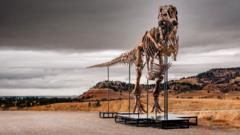
T. Rex Fossil Auction Raises Concerns Among Scientists
In 1997, Sotheby's held a landmark auction featuring a Tyrannosaurus Rex fossil, marking a pivotal moment for natural history collections. The fossil, named Sue, was sold to Chicago's Field Museum for $8 million. Fast forward nearly three decades, and another T. rex fossil, dubbed Gus, is set to be auctioned with an estimated value of $30 million, potentially becoming the most expensive dinosaur fossil ever sold.
Gus the T. Rex: A Highly Valued Specimen
Gus represents one of the most complete T. rex specimens discovered, and its impending sale highlights a broader debate within the natural history community. Should fossils of such scientific significance remain within museum collections, or should private collectors also have access?
Cassandra Hatton, head of natural history at Sotheby's, points out the challenges faced by fossil hunters and the potential rewards of their labor. Many fossil hunters spend extended periods in remote areas like South Dakota's Badlands, enduring harsh conditions to unearth these prehistoric treasures.
The Long Journey of Gus
The discovery of Gus was a lengthy process. Thomas Heitkamp and his team, after finding the fossil on land owned by the late Gary "Gus" Licking, spent three years excavating it. Following excavation, they dedicated an additional three years to documenting and reconstructing the T. rex in the lab.
This labor-intensive process culminates in the upcoming auction, where Gus's starting bid is set at $19 million. However, this high price tag raises issues for institutions like the Natural History Museum in London, which struggle to compete financially.
The Impact on Scientific Research
Professor Susannah Maidment of the Natural History Museum stresses the importance of access to original fossils for scientific study. The increasing commercialization of significant specimens can limit research opportunities, as private collections often restrict scientific access. This inaccessibility poses a challenge for palaeobiologists aiming to understand past life on Earth, especially during a time of rapid environmental changes.
The public's ability to engage with these specimens is also at stake. Viewing real dinosaur fossils in museums can inspire interest in the natural world, an opportunity that may diminish as more fossils enter private collections.
The Auctioneer's Perspective
Cassandra Hatton argues that the value of fossils like Gus reflects their importance and the expertise required to recover them. She emphasizes that fossil hunters often work under challenging conditions and should be compensated fairly for their efforts. While some fossils end up in the hands of wealthy collectors, others, like the Stegosaurus Apex, have been loaned to museums, making them accessible to the public.
Challenges of Private Collection
Dr. Fiann Smithwick, a professional fossil hunter, notes that while private collections can contribute to the preservation of fossils, they present challenges for scientific research. Studies based on privately held specimens may not be accepted by leading scientific journals, hindering the advancement of palaeontological knowledge.
Preserving History for Future Generations
Despite differing perspectives, there is a consensus on the vital role that fossil hunters play in preserving these ancient specimens. Without their efforts, many fossils would be lost to erosion or destruction.
As the auction approaches, the scientific community continues to grapple with the implications of private ownership of significant fossils. While some argue for the democratization of fossil access, others emphasize the need for public institutions to safeguard these pieces of natural history.
Source: Original Article