Poland to Honor Victims of WWII Conflict
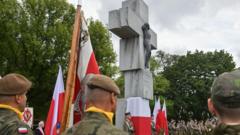
Polish Prime Minister Donald Tusk has declared plans to create a national memorial dedicated to the victims of violence attributed to Ukrainian nationalists during World War II. This announcement coincides with the anniversary of the 1943-45 events known in Poland as the 'massacre' in Volhynia, a region that was part of German-occupied Poland at the time and is now within Ukraine.
According to Polish accounts, approximately 100,000 ethnic Poles were killed by the Ukrainian Insurgent Army (UPA) during this period. While many in Ukraine view the UPA as freedom fighters who opposed both Soviet and Nazi forces, the historical narrative remains a point of contention between the two nations.
Calls for Reconciliation
In his speech, Prime Minister Tusk emphasized the importance of truth and reconciliation, stating, "Truth is our duty toward the victims, but also a way to overcome a painful past for the sake of a better future." He further stressed that memory should not fuel hatred and urged Ukraine to acknowledge this history as part of its aspirations to join the European Union.
Tensions have recently escalated between Poland and Ukraine, notably after Ukrainian President Volodymyr Zelensky was stripped of Poland's highest state honor. This decision followed Zelensky's naming of a Ukrainian military unit after the UPA, leading to a diplomatic disagreement. Despite this, Polish President Karol Nawrocki assured that Poland's support for Ukraine, especially in its ongoing conflict with Russia, remains steadfast.
Ukrainian Response and Historical Context
In response, three former Ukrainian presidents returned their Polish White Eagle awards in solidarity with Zelensky. In a subsequent address, Zelensky highlighted joint commemorative efforts by Ukrainian and Polish representatives to honor the Volyn victims, emphasizing the shared threat posed by Russia to both nations' independence.
The exact number of casualties from the Volhynia events is debated. Poland’s Institute of National Remembrance estimates approximately 100,000 people died in the anti-Polish campaign across Volhynia, Eastern Galicia, and Lublin, with an additional 10,000 to 12,000 Ukrainians believed to have died in retaliatory actions.
This enduring historical dispute continues to influence relations between Poland and Ukraine, underscoring the complexity of reconciling past conflicts while facing current geopolitical challenges.
Source: Original Article