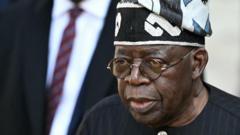
President Initiates Investigation into Alleged Fictitious Agency
Nigerian President Bola Tinubu has initiated a corruption probe following accusations that a fictitious government agency was established within his office, reportedly allocated with public funds amounting to $950,000 (£700,000). The presidency announced that the document purportedly creating the Presidential Foreign Intervention Promotion Council (PFIPC) was forged.
Manhunt for Alleged Impersonator
The police have launched a search for Adeniyi Adeyemi Matthew, who allegedly posed as the PFIPC's director general. He is suspected of forgery and impersonation. Before disappearing, Adeyemi proclaimed his innocence to local media and expressed fear for his safety. He also vowed to clear his name in court, claiming the body was lawfully established, and accused senior officials of corruption during his appointment process. These allegations have been refuted by the presidency.
Agency's Questionable Existence
Adeyemi asserted that the council, formed in 2024 to attract foreign investments, had not executed any deals. The council reportedly employed three staff members, who have been questioned by police. President Tinubu has tasked the Independent Corrupt Practices and Other Related Offences Commission (ICPC) with investigating these claims and submitting a report within 30 days.
Details of the Investigation
BBC News Pidgin reported that the agency secured office space within the Federal Secretariat in Abuja, opened accounts with the Central Bank of Nigeria, and was included in the 2026 Appropriation Act with a 1.3 billion naira allocation. However, the Accountant-General's Office stated that PFIPC never operated an account with the central bank or received funds.
Forgery and Legal Proceedings
The presidency stated that a forensic analysis confirmed the signature of the president's chief of staff, Femi Gbajabiamila, on the disputed document was forged. Legal charges against Adeyemi and two others include using forged documents to establish the council, opening multiple bank accounts, and seeking official recognition for a non-existent agency.
Presidential Directive and Public Reaction
President Tinubu directed the ICPC to explore multiple allegations, including the use of falsified documents for official recognition, opening bank accounts with forged documents, and identifying any public or private entities involved. The president also called for an examination of how the alleged agency gained the semblance of legitimacy and suggested identifying procedural weaknesses within the government.
The incident has sparked public demand for an independent investigation, with civil society organizations, opposition politicians, and senior lawyers urging action. Tinubu emphasized the importance of safeguarding the integrity of the presidency and federal institutions from impersonation and forgery, asserting that those found guilty would face legal consequences.
Source: Original Article