NATO Secretary General on Trump's Remarks
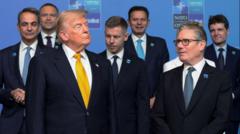
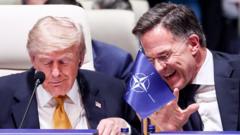
NATO Secretary General Mark Rutte recently addressed Donald Trump's statements about the alliance, characterizing them as akin to a 'family argument.' Speaking at the NATO summit in Ankara, Rutte emphasized the enduring strength and unity of the Western defense coalition despite the former U.S. president's controversial remarks.
Trump had expressed disappointment over NATO's lack of involvement in his military campaign against Iran, although several member countries, including the UK, allowed the use of their bases for U.S. operations. Trump also reiterated his views on acquiring Greenland and criticized Spain as 'a terrible partner,' despite acknowledging a sense of 'unification' among leaders at the summit.
Rutte's Confidence in NATO's Unity
Rutte, who served as the Dutch prime minister, compared the situation to family dynamics where disagreements are natural but underlying commitment remains strong. He assured that Trump is committed to NATO, despite past suggestions that the U.S. might consider withdrawing from the alliance.
According to Rutte, the U.S. understands the strategic importance of NATO, especially in operations like Operation Epic Fury against Iran that relied on European support. He highlighted the use of European bases by American planes during the operation as evidence of the vital role Europe plays as a power projection platform.
The Strategic Importance of NATO
Rutte pointed out NATO's significance as a defense mechanism against potential threats, particularly from Russia. With the Nordic countries near Russia's nuclear submarine bases, NATO acts as an early warning system for the U.S., preventing Russian submarines from nearing American shores. He emphasized the necessity of the alliance, comprising 32 countries, in maintaining collective security.
Focus on Defense Spending and Industrial Capacity
The summit also focused on transforming European governments' defense spending pledges into actionable steps, aiming to counter threats from Russia's extensive missile and drone capabilities. Although some countries, such as the UK, have yet to outline a clear path to achieving a 3% GDP defense spending target by 2030, Rutte expressed satisfaction with the progress made since the last summit in The Hague in 2025.
He noted that an additional quarter of a trillion dollars has been spent by Canada and European nations on defense in the past two years. This increase is seen as a step towards boosting Europe's defense industrial production, maintaining support for Ukraine, and preparing for future threats.
Readiness for Potential Threats
When asked about NATO's readiness to respond to potential Russian aggression, such as a hypothetical land grab in Estonia by 2030, Rutte conveyed confidence in the alliance's preparedness. He assured that NATO is ready to defend itself against any adversary, emphasizing its defensive posture and commitment to collective security.
Source: Original Article