Funeral Procession for Iran's Khamenei Held in Iraq
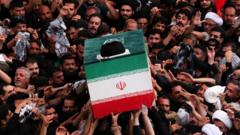
The remains of Iran's former Supreme Leader, Ayatollah Ali Khamenei, were taken through two of the most revered shrines in Shia Islam, located in Iraq. This event marks the continuation of funeral ceremonies that have been ongoing for five days. Large crowds gathered in Najaf, a city known for its spiritual significance, to participate in the procession that culminated at the mausoleum of Imam Ali—son-in-law of the Prophet Muhammad and the first Imam of Shia Islam. Mourners crowded around the coffin, eager to show their respects, before prayers were conducted inside the mausoleum.
Following the events in Najaf, Khamenei's coffin was flown to Karbala. Similar scenes unfolded there as the coffin was taken to the mausoleum of Imam Hussein, the grandson of the Prophet Muhammad. His death in the 7th century was a pivotal moment that deepened the divide between Shia and Sunni Muslims.
Political Implications and Regional Tensions
Khamenei was killed during the initial stages of a conflict between Iran, the United States, and Israel. His burial is scheduled for Thursday in Mashhad, located in north-eastern Iran. The funeral procession in Najaf saw thousands, including Mohammed al-Bayati, 30, who expressed to AFP the significance of participating in the event honoring someone who had openly challenged the power dynamics involving America and Israel. Chants denouncing these countries were audible as the coffin advanced towards the shrine of Imam Ali.
Video footage from the event showed mourners vying to get close to the coffin as it was carried by hand through the mausoleum's corridors. A prominent cleric from Najaf's Shia seminaries subsequently led the funeral prayers.
Later in the day, the procession in Karbala drew similar numbers. The events were attended by Iranian President Masoud Pezeshkian and other high-ranking officials who traveled to Iraq for the occasion. They were greeted by Iraq's Prime Minister al-Zaidi, who declared a public holiday in honor of the event.
Ongoing Conflict and Diplomatic Efforts
Iran's new Supreme Leader, Mojtaba Khamenei, who succeeded his father, was notably absent from the public ceremonies. It is reported that he sustained serious injuries in the same Israeli airstrike in Tehran that resulted in his father's death, along with other family members.
There have been recent escalations between the United States and Iran. After mutual accusations of attacks on tankers in the Strait of Hormuz, the US conducted strikes on Iranian military assets, prompting retaliatory actions from Iran targeting US facilities in Bahrain and Kuwait. US President Donald Trump indicated that the preliminary agreement to cease hostilities might now be defunct. Iran's Parliamentary Speaker, Mohammad Bagher Ghalibaf, asserted that the US had breached the agreement, emphasizing Iran's resolve.
The memorandum of understanding, initially signed by Trump and Pezeshkian, aimed to reopen the crucial Strait of Hormuz and set a two-month deadline for a comprehensive agreement concerning Iran's nuclear activities, sanctions, and a lasting peace. Mediator Qatar suggested that progress had been made in indirect talks between US and Iranian representatives in Doha, with further discussions scheduled post-Khamenei's funeral ceremonies.
Source: Original Article