Escalation in Yemen Conflict
In a recent escalation of the ongoing conflict in Yemen, the Houthi rebels have launched missiles at Abha airport located in southwestern Saudi Arabia. This action was in response to airstrikes on Sanaa's airport, which the Houthis attribute to Saudi Arabia.
Details of the Retaliation
The Saudi-led coalition, which backs Yemen's internationally-recognized government, reported that their air defenses managed to handle the missile threat without any casualties. The Houthis, who are supported by Iran and control northwestern Yemen, accused Saudi Arabia of aggressive actions that targeted the runway at Sanaa's airport. According to Yemen's government, the attack aimed to prevent an Iranian aircraft from landing.
Background of the Conflict
The current situation marks a significant flare-up in what has been a relatively dormant conflict since an informal truce was established four years ago. The Yemeni civil war began in 2014 when the Houthis took control of the capital, Sanaa, driving out the government. The conflict intensified in 2015 when a Saudi-led coalition intervened to reinstate the government's rule. The war has claimed over 150,000 lives and created one of the world's most severe humanitarian crises, affecting over 22 million people according to UN reports.
Impact of Recent Strikes
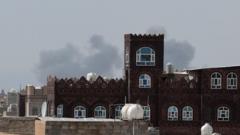
Social media footage from Monday showed smoke rising from Sanaa following the strikes at the city's international airport. Houthi-run al-Masirah TV reported that the airport's runways for departures and landings were targeted. The Yemeni government, now operating from Aden, claimed responsibility for these strikes. They cited a disagreement over an Iranian plane transporting a Houthi delegation back from Iran following the funeral of the late supreme leader, Ayatollah Ali Khamenei.
"The terrorist Houthi militias, backed by the Iranian regime, prevented Yemeni national aircraft from landing at the airport in the capital, Sanaa, while insisting on allowing an Iranian plane to violate Yemeni territory; consequently, the airport runway was targeted," stated the Yemeni defense ministry.
The Iranian aircraft, which was unable to land in Sanaa, was redirected to Hudaydah, a city approximately 150km southwest.
Responses and International Reactions
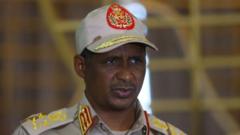
The Houthi military spokesperson, Yahya Saree, accused Saudi Arabia of initiating the Sanaa strikes. He declared that this action ended the "de-escalation phase" of the conflict and assured that retaliation would follow. In response, Saree announced the launch of ballistic missiles and drones at Abha International Airport as a reaction to what he called "criminal Saudi aggression." He also issued a warning to airlines against using Saudi airspace until the blockade on Sanaa International Airport is lifted.
The Saudi-led coalition later confirmed on social media that their air defenses had addressed the missile threats from the Houthis.
In an emergency meeting at the UN Security Council in New York, Assistant Secretary General Khaled Khiari voiced concern over the escalating violence, urging all parties to engage in negotiations facilitated by the UN. The UK's representative at the UN condemned the Houthi attacks on Saudi Arabia, emphasizing the threat they pose to regional security. Meanwhile, Iran's foreign ministry criticized the airstrikes on Sanaa's airport, labeling them as a "clear violation of international law."
Source: Original Article