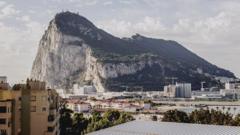
Gibraltar and Spain to Witness New Era of Borderless Relations
Every day, Shilpi Chotrani commutes by bicycle from her home in La Línea de la Concepción, Spain, to her workplace in Gibraltar. While the journey is short, it requires crossing an international border. This border has been a fixture for over a century, separating the British Overseas Territory of Gibraltar, with its 40,000 residents, from Spain. The removal of these border controls, scheduled for July 15, represents a significant change, promising to ease the daily commute for approximately 15,000 Spanish workers who cross into Gibraltar.
Economic Impact and Local Perspectives
The decision to eliminate the border has generated optimism on both sides. Chotrani, who works in human resources for a shipping and tourism company, expresses relief about the change. "This should have been done a long time ago," she says. The economic disparity between Gibraltar, one of the wealthiest regions per capita, and its Spanish neighbor La Línea de la Concepción, where unemployment is near 30%, makes the border removal particularly impactful.
Juan Franco, mayor of La Línea de la Concepción, highlights the economic interdependence, noting that many local businesses rely heavily on clientele from Gibraltar. The removal of the border is expected to stimulate economic growth by facilitating free movement and trade, potentially reducing the economic imbalance between the two areas.
Post-Brexit Agreement and Historical Context
The removal of Gibraltar's border controls comes as part of a wider agreement between the European Union and the UK, following the UK's withdrawal from the EU. Gibraltar shares a land border with the EU, complicating post-Brexit negotiations. The agreement aligns Gibraltar with the European customs union and the Schengen Area, allowing free movement while maintaining checks at Gibraltar's airport and port for travelers from outside the Schengen Area.
Chief Minister Fabian Picardo describes the changes as transformative, emphasizing the newfound "fluidity of people and goods" with Spain and the EU. Gibraltar's relationship with Spain has historically been fraught, with tensions peaking during a 1969 blockade by Spain. The current agreement is seen as a positive shift towards cooperation.
Challenges and Adjustments Ahead
Despite the positive outlook, there are concerns, particularly regarding the new regulatory and tax measures that accompany the agreement. Gibraltar will now need to comply with EU regulations, and a new transaction tax is being introduced to replace import duty. Initially set at 15%, this tax will rise to 17%, with additional excise taxes on certain items.
John Isola, managing director of the Anglo Hispano Company, acknowledges the challenges that these changes pose for businesses. New compliance requirements and paperwork could impact competitiveness, particularly for those importing goods from outside the EU. Nevertheless, Isola views the overall arrangement as a beneficial compromise that will likely attract more visitors and boost the local economy.
Source: Original Article