Heightened Military Actions in the Gulf
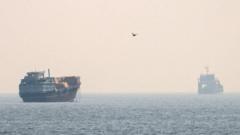
The United States has initiated another series of strikes on Iran following a recent escalation in hostilities between the two nations. President Donald Trump announced the strikes, emphasizing they were in response to Iran's alleged bombing of ships in the Strait of Hormuz, a crucial international shipping channel.
Explosions have been reported in several southern Iranian cities, including Sirik and Bandar Abbas, according to Iranian state media. Following these developments, Gulf nations have experienced various retaliatory actions from Iran. Bahrain reported explosions in its capital, Manama, while Kuwait intercepted missiles and drones. Qatar has also issued security alerts.
Iran's Retaliatory Measures
The Islamic Revolutionary Guard Corps (IRGC) confirmed launching retaliatory strikes against US facilities in Kuwait and Bahrain, describing these actions as the initial phase of their response to what they termed as 'American treaty-breakers.'
Iran's parliamentary speaker, Mohammad Bagher Ghalibaf, expressed his stance on social media, asserting that aggressive actions from the US would not go unanswered and reiterating Iran's control over the Strait of Hormuz.
US Military Objectives
US Central Command (Centcom) stated that the strikes aimed to diminish Iran's capabilities to threaten commercial shipping and civilian mariners in the region. The operation targeted 90 military installations, including air defense and logistical infrastructure along Iran's coastline.
Further explosions were reported in other coastal regions of Iran, such as Konarak and Chabahar, with Iranian state television recounting eight explosions in Bandar Abbas. Allegations also emerged of missile impacts in Sirik and Jask, and the contentious island of Abu Musa.
Impact and Responses
While the full extent of the damage remains unclear, Iranian media reported disruptions such as power outages in Chabahar and a fire at an IRGC barracks in Bushehr. Efforts to restore power in Chabahar have been partially successful.
Centcom attributed blame to Iran for recent aggressive actions against commercial vessels navigating the vital waterway. President Trump, during a conversation with reporters, mentioned that Iran had reached out for negotiations, but he expressed skepticism about their willingness to adhere to agreements.
Background and Continuing Conflict
The latest confrontations mark a significant escalation since a memorandum of understanding (MoU) between the US and Iran was signed in June, which included a ceasefire and provisions for continued negotiations. Despite the agreement, President Trump declared the ceasefire void, citing recent attacks and expressing a lack of interest in further talks.
In response, Iran's Foreign Minister Abbas Araghchi criticized the US's approach, advocating for decisive actions rather than rhetoric.
This recent exchange is not the first breach of the MoU; previous incidents in late June also saw military engagements following attacks in the Strait of Hormuz, but both parties had initially agreed to de-escalate.
Source: Original Article