Elderly Man Injured in Bison Encounter at Yellowstone National Park
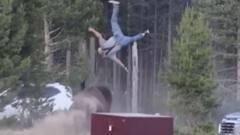
A bison weighing approximately 2,000 pounds (900 kg) charged at a 65-year-old man, identified as Carl Isom-McDaniel, in Wyoming's Yellowstone National Park, causing him to be thrown into the air. The incident, captured on video, occurred as Isom-McDaniel and his grandson were taking photos of the bison lying on the grass. The bison suddenly got up and charged toward them.
Isom-McDaniel sustained multiple injuries and was described by witnesses as being in significant pain. He was transported to a hospital for treatment, according to reports from the New York Times. The National Park Service (NPS) has not yet commented on the event.
The NPS warns visitors on its website that bison, despite appearing calm, are responsible for more injuries in Yellowstone than any other animal. They can run three times faster than humans, emphasizing the need to maintain a safe distance. The NPS advises staying at least 25 yards (23 meters) away from bison and never approaching them for photographs.
The incident took place on a Friday evening near Bridge Bay Campground, close to Yellowstone Lake, just before sunset. Isom-McDaniel and his grandson had stopped to take a picture of the bison when it became agitated, flopping on its side before standing up and charging. A nearby truck left the scene quickly after the bison charged it, and the animal then pursued Isom-McDaniel and his grandson. Despite their attempts to escape through a group of trees, the bison caught up to Isom-McDaniel.
According to Mike Macleod, who witnessed and recorded the event, "The bison hooked him with its left horn on his hip and tossed him into the air." Macleod described Isom-McDaniel as being in pain, particularly with his leg, but noted that he remained conscious and in good spirits, even joking during the incident.
Heightened Risk During Mating Season
Yellowstone experiences its busiest season during the summer, with nearly 60% of annual visitors arriving in June, July, and August. This period coincides with the bison's mating season, during which bulls exhibit increased testosterone levels and unpredictable behavior, according to Jennifer Barfield, the scientific lead at Colorado's Laramie Foothills Bison Conservation Herd.
Barfield, a professor at Colorado State University, noted that her team avoids close proximity to bison during mating season, opting instead to observe them from vehicles for safety. She emphasizes the importance of keeping a minimum distance of 25 yards from bison, particularly during this time.
The incident serves as a reminder of the potential dangers of wildlife encounters in national parks and the importance of adhering to safety guidelines to avoid similar occurrences.
Source: Original Article