Details of College Shooting Incident Unfold in Court
The court proceedings regarding the shooting of conservative activist Charlie Kirk at a Utah college have revealed significant details about the suspect's actions on the day of the incident. Tyler Robinson, aged 23, is accused of fatally shooting Kirk on September 10, 2025, while Kirk was addressing an audience at Utah Valley University.
Actions Prior to the Shooting
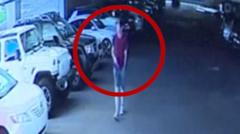
According to testimony presented in court, Robinson was seen on the college campus several hours before the shooting. Surveillance footage allegedly shows him walking around the campus, dressed in a T-shirt and shorts, and purchasing a meal from Chick-fil-A. The footage also indicates that Robinson interacted with members of Kirk's organization, Turning Point USA, although details of this interaction were not elaborated upon by investigators.
David Hull, the lead investigator from Utah's state Bureau of Investigation, testified about Robinson's movements on that day. Hull described how Robinson left the campus and returned approximately 90 minutes before the shooting, wearing different clothes and walking with a noticeable limp. The surveillance footage allegedly captures Robinson making his way to a building on campus, climbing over a railing, and reaching the rooftop.
The Shooting and Aftermath
Shortly after the fatal shot was fired, the suspect is seen running across the rooftop and descending with an unidentified object in his hands. A rifle was discovered in a nearby wooded area, which investigators believe was accessed by Robinson after the shooting, as stated by Hull.
In the hours following the attack, Robinson reportedly returned to the college. Hull testified that a police officer briefly interacted with Robinson near the campus, noting his vehicle's license plate as the manhunt continued into the early hours of September 11.
Defense Challenges Evidence
Kathy Nester, Robinson's defense attorney, has called into question the validity of the evidence presented by the prosecution. Nester contested various pieces of evidence, including the surveillance footage, and argued against the potential for the death penalty. She highlighted inconsistencies, such as the presence of another weapon found on campus and differing descriptions of the suspect provided by witnesses.
The defense team objected to the presentation of the edited footage and raised concerns about the absence of the original filmmakers for cross-examination. These objections provide insight into their strategic approach to the case.
DNA Evidence and Expert Testimony
Further testimony came from Jennifer Faumuina, a sergeant with the state bureau of investigation, who discussed the processing of DNA found on a screwdriver, rifle, and towel recovered at the scene. An FBI report introduced by the prosecution matched the DNA to Robinson, as well as to his roommate and romantic partner, Lance Twiggs, who has been cooperating with the investigation.
The defense called FBI forensic analyst Amanda Bakker to the stand, scrutinizing the protocol and potential for error in the DNA testing process.
Next Steps in the Legal Process
The preliminary hearing, expected to conclude on Friday, will allow Judge Graf to decide if the prosecution's evidence is sufficient to bring the case to trial. Unlike a typical trial, the prosecution at this stage only needs to establish reasonable grounds for a trial, rather than proving guilt beyond a reasonable doubt.
Source: Original Article